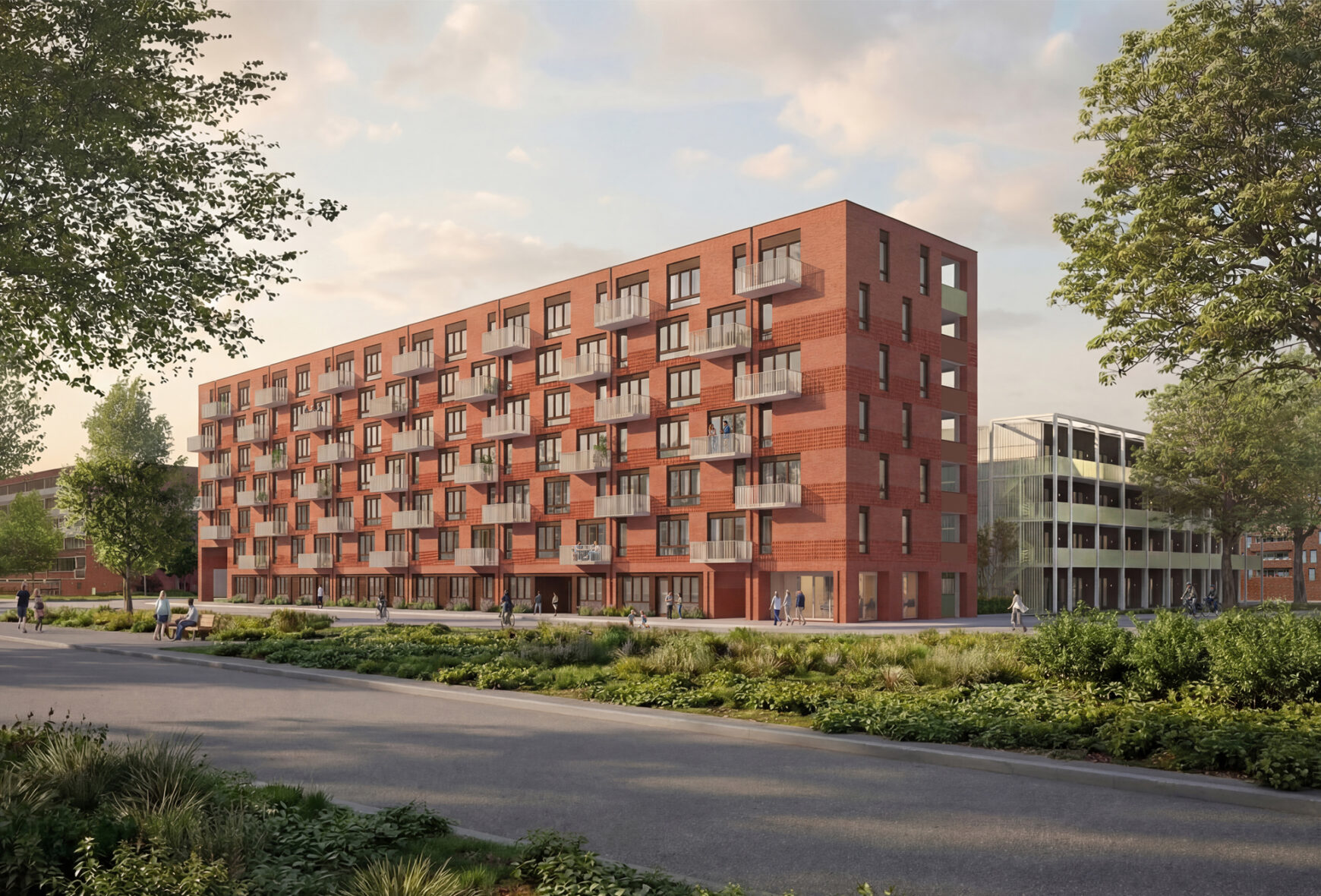
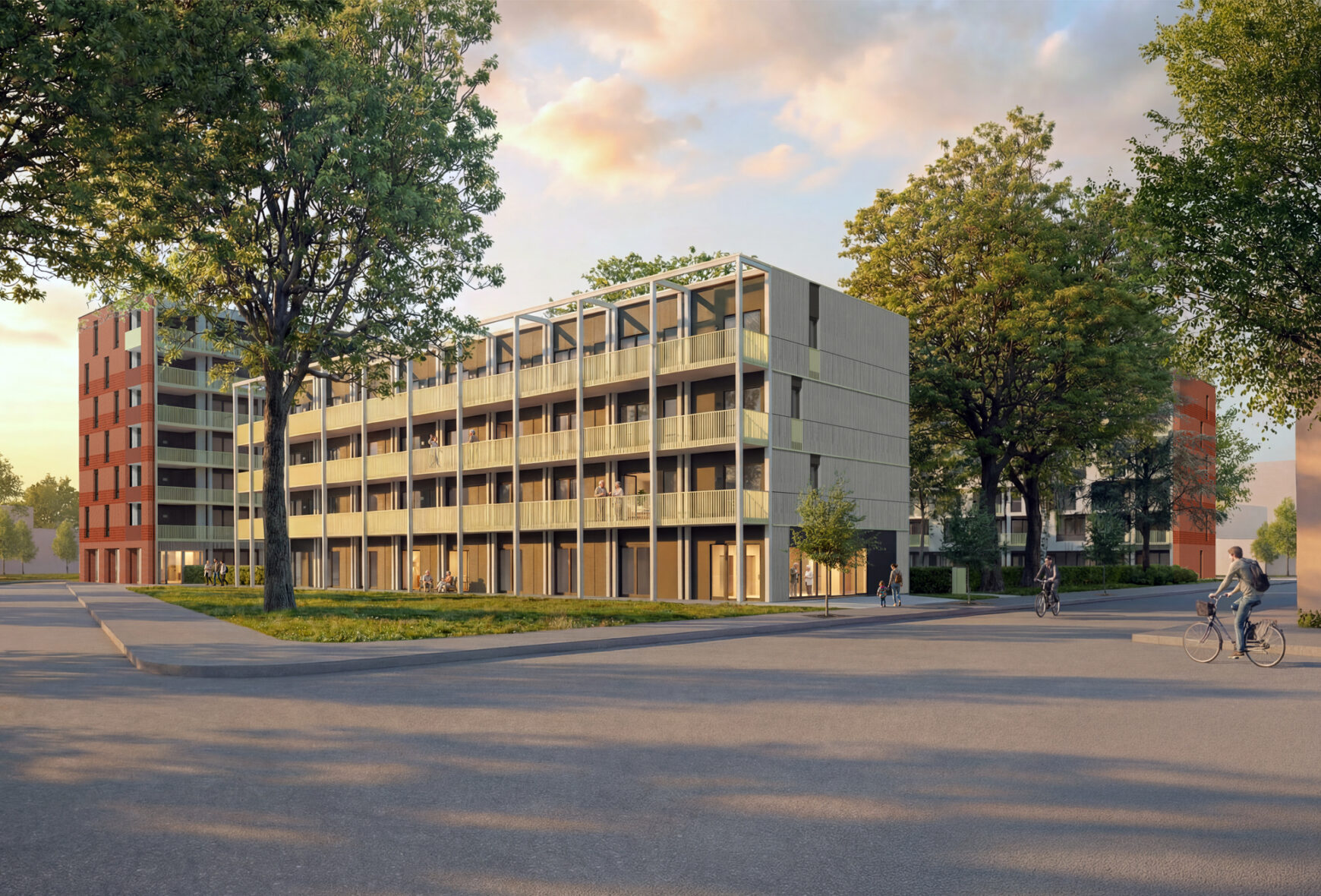
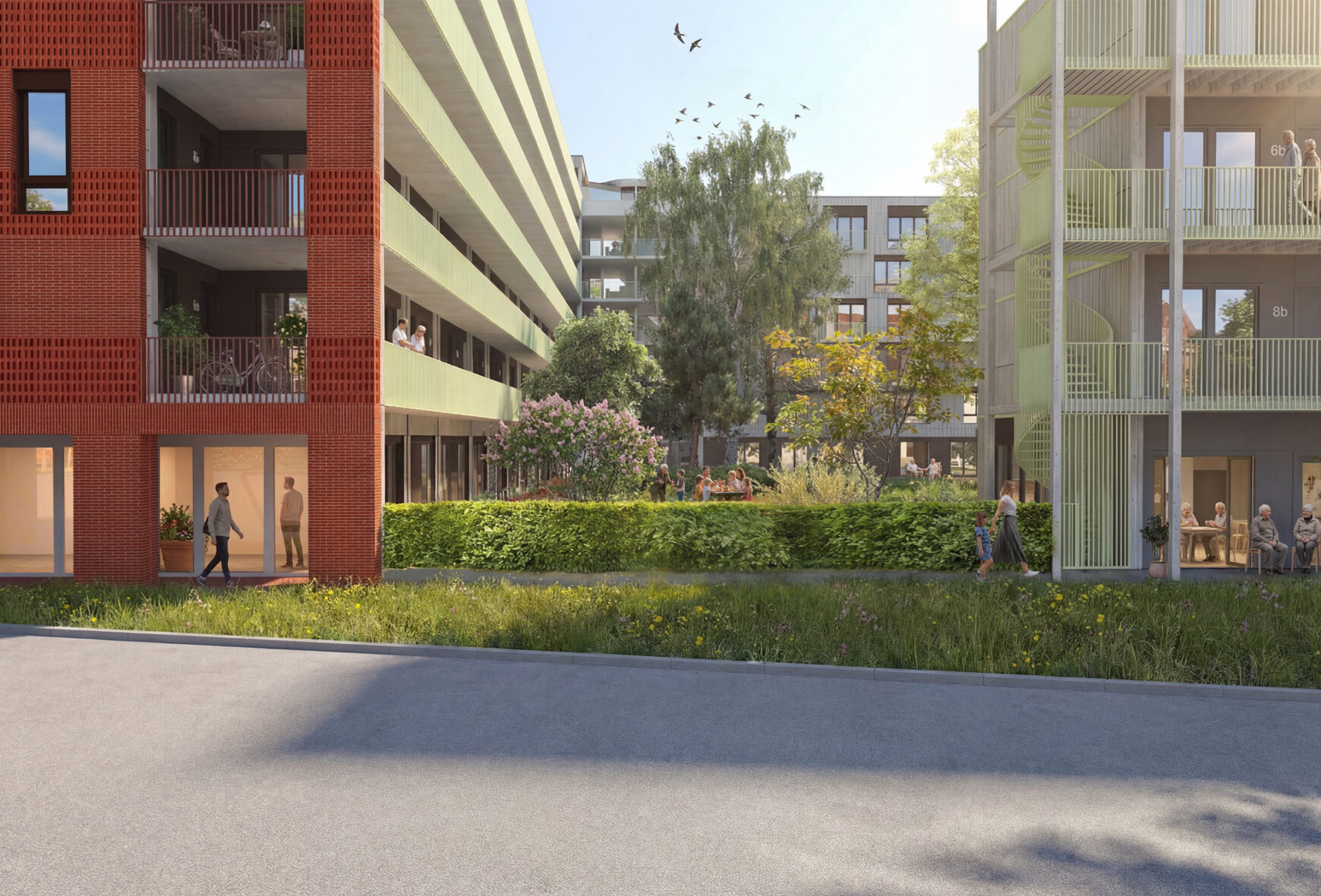
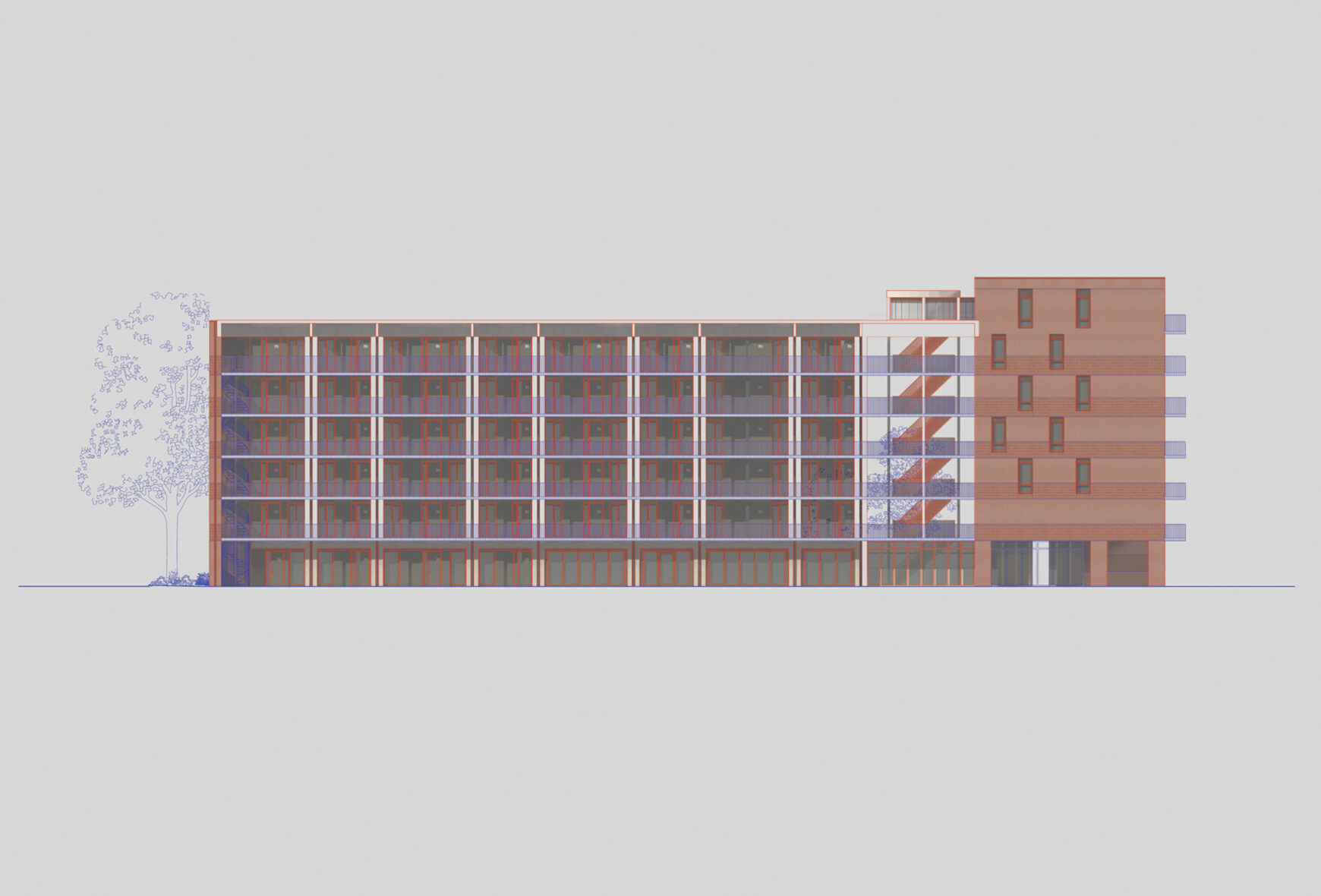
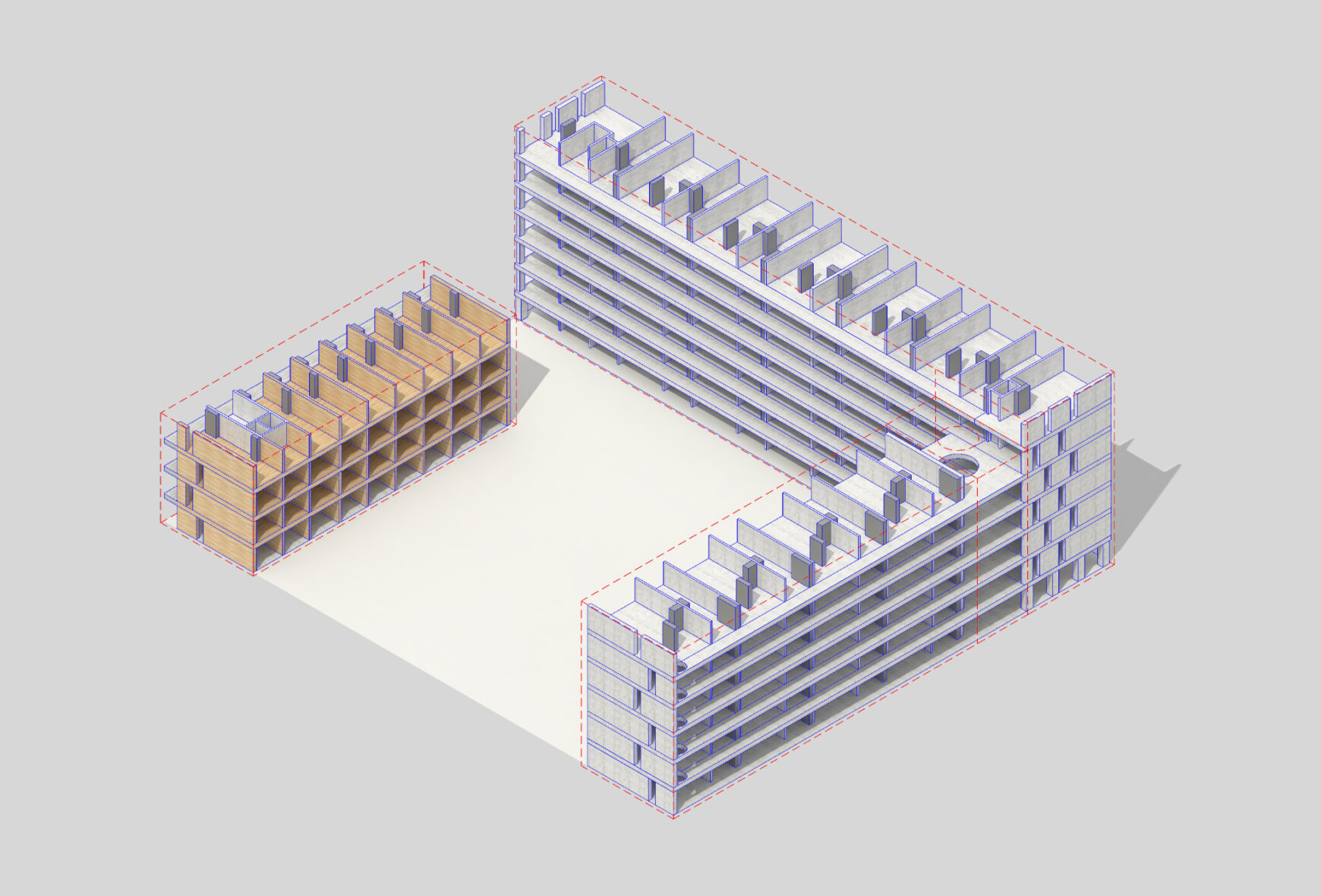
Meer en Vaart reinterprets the post-war garden city for contemporary living through a careful balance of densification and landscape enhancement. Replacing an ageing residential ensemble, the project delivers more homes, stronger social cohesion and a climate-resilient environment while reinforcing the spatial qualities of its underlying planning legacy and original urban structure.
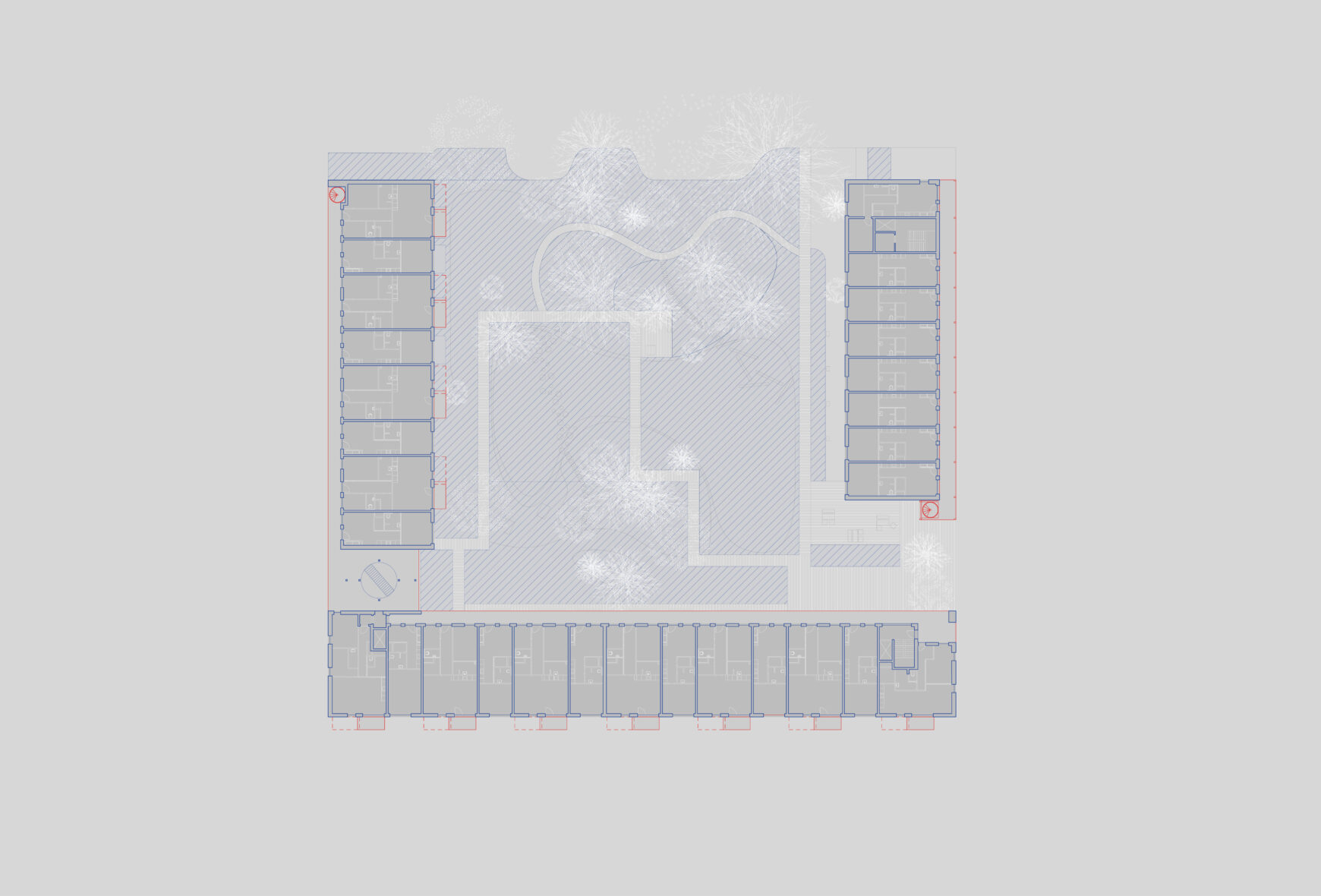
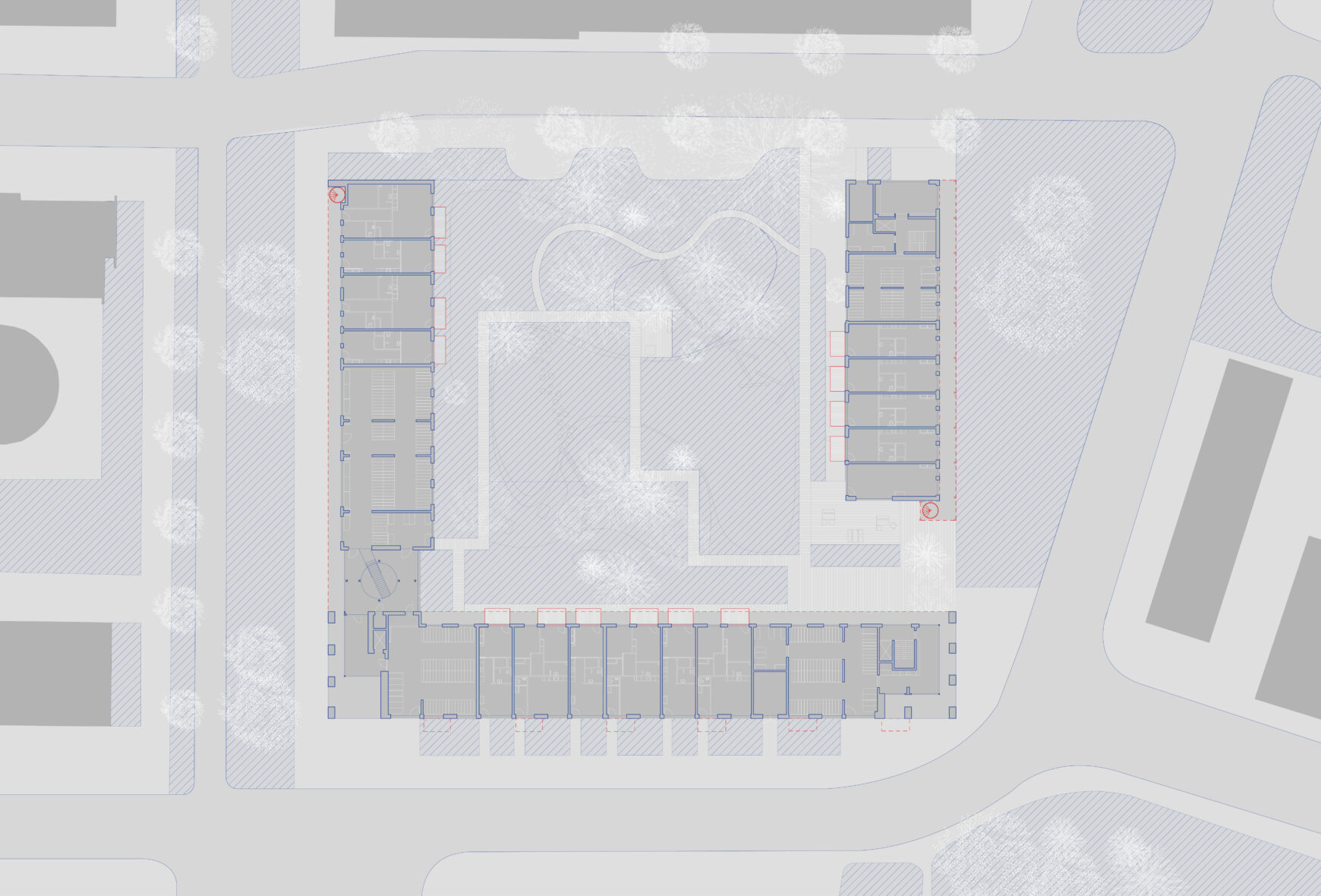
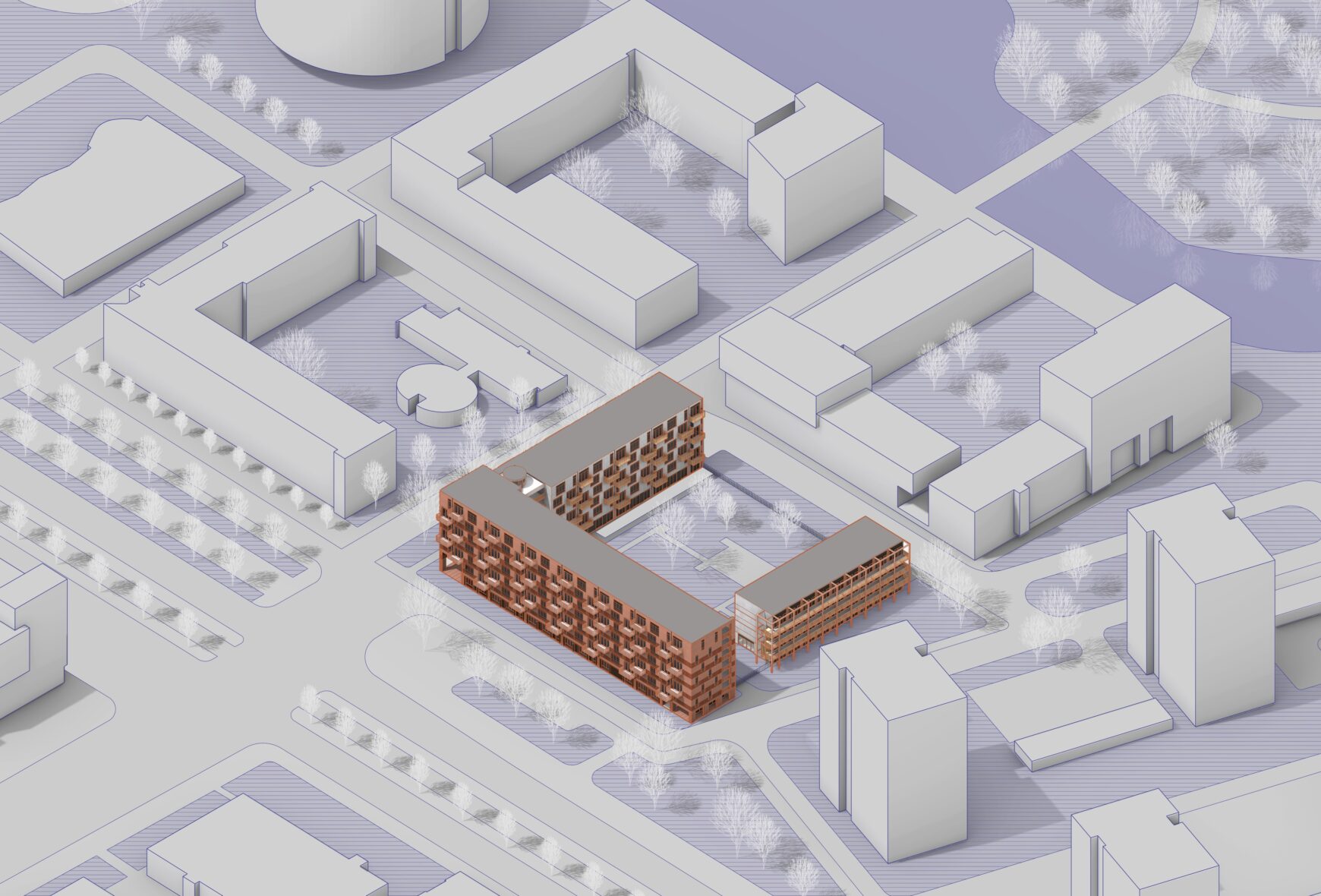
The redevelopment builds on the principles of the Amsterdam General Expansion Plan (AUP): open urban blocks, collective green spaces and a clear spatial hierarchy. The project forms one of four ensembles within the neighbourhood, each composed of two complementary building typologies: an L-shaped residential building and a smaller freestanding building, occasionally accommodating a distinct program.
The design strengthens the relationship between buildings, street and communal courtyard garden, responding to both the site’s historical character and its contemporary context.
Sixty-nine obsolete dwellings are replaced by 155 future-proof, socially inclusive homes within the social and mid-market rental sectors. Shared amenities and sustainable mobility solutions are organised around a collective semi-public courtyard garden that forms the heart of the ensemble. Featuring a wadi for rainwater management and mature trees, this landscape enhances biodiversity, climate resilience and opportunities for social interaction.
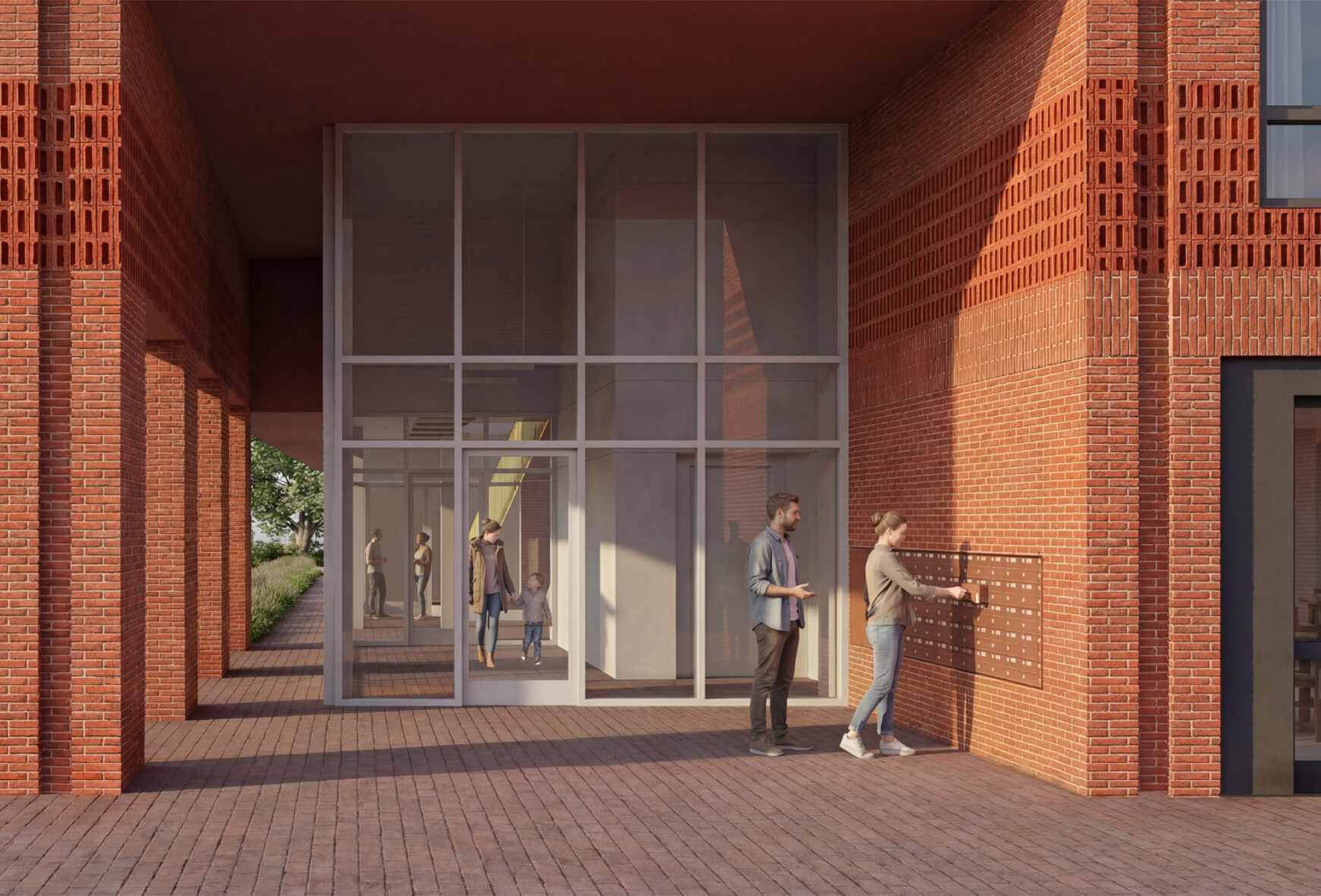
The ensemble comprises an L-shaped residential building with brick or timber façades, alongside a detached senior housing building with a pavilion-like character, constructed mainly in cross-laminated timber (CLT), with timber cladding. The main residential building is defined by an alternating structural rhythm expressed in both façades and floor plans, contributing to the architectural identity of the development while reinforcing its human scale. The façades are articulated through a horizontal rhythm of brick bonding and detailing, complemented by finely integrated railings. At the junction of the two volumes forming the L-shape, a transparent social hub is created, with clearly identifiable entrances and centrally positioned vertical circulation cores that support orientation, accessibility and community life and together with the other entrances provides natural oversight and a sense of security towards the courtyard. Bicycle storage is located directly adjacent to the entrances, encouraging everyday use of cycling infrastructure, while supporting an active and social threshold space.
Program
127 apartments in the social and middle rent sector and 28 senior apartments for rent
Size
12,030 m2
Responsibility
Architectural design, esthetic site supervision
Client
Eigen Haard
Team
Olaf Gipser, Abdullah Zakrat, Jean-Marc Saurer, Dimitri van der Wal, Melvin Kleijn
Advisors
Cauberg Huygen, Goudstikker de Vries, VIAC Adviseurs
Contractor
Hillen & Roosen
Landscape Design
Smartland landscape architects
Period
2021-2028